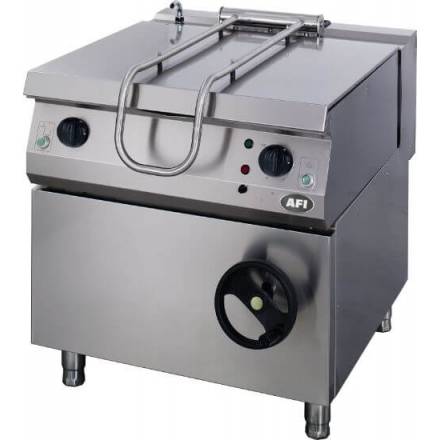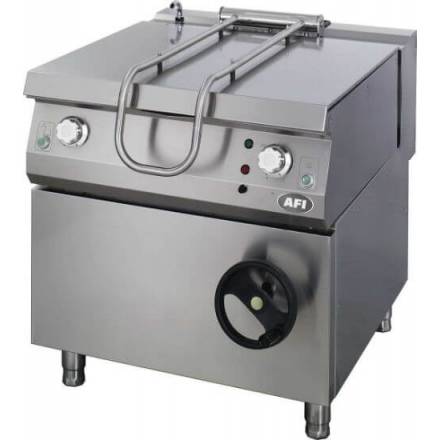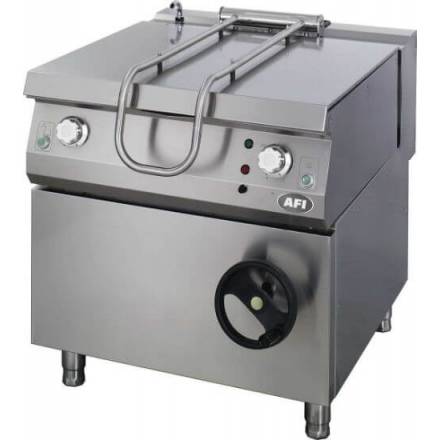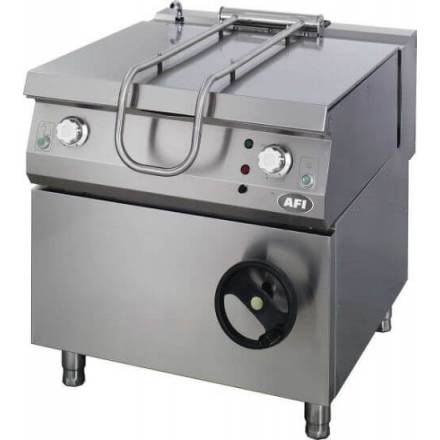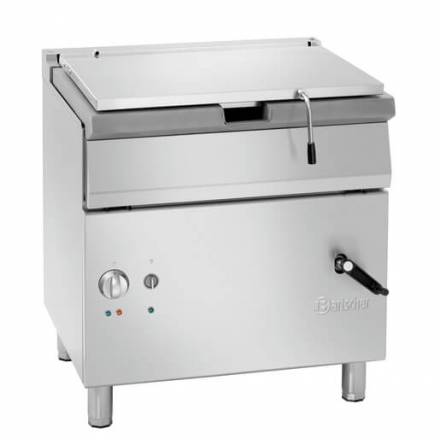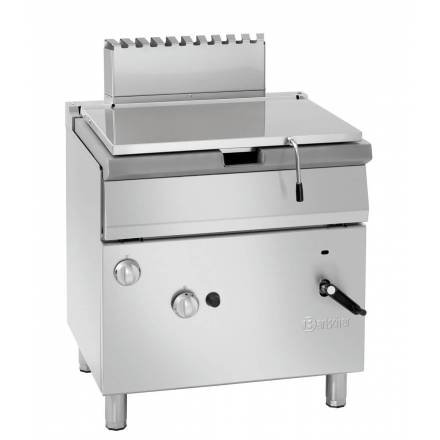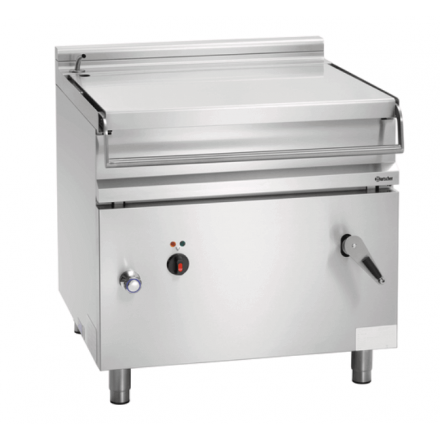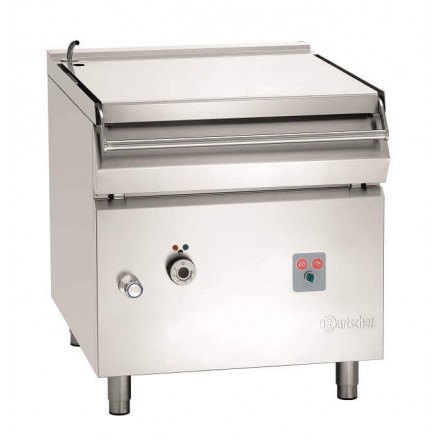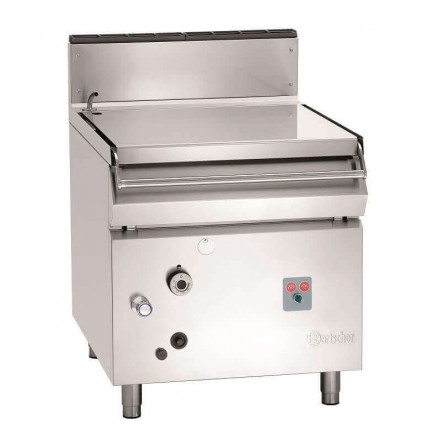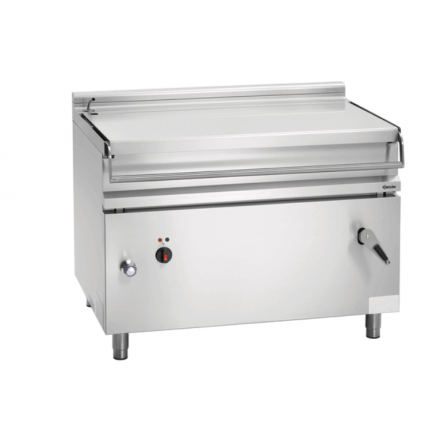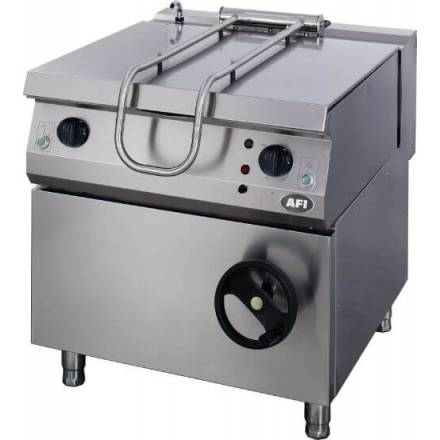
The professional tilting pan (also called tilting frying pan or tilting braising pan) is an essential piece of equipment for collective kitchens, restaurants, and catering services. It allows you to cook, braise, sear, and keep large quantities of food warm quickly and efficiently.
What is a professional tilting pan?
The tilting pan is a wide, shallow tank mounted on a frame with a tilting mechanism that makes it easy to empty preparations. It comes in electric or gas versions, with manual or automatic controls, and capacities adapted to professional needs.
How it works and uses
The tank heats evenly via a resistance (electric) or a burner (gas). Tilting makes serving and cleaning easier. Common uses include:
Preparation of sauces, stews, and casseroles
Quick sautéing and cooking of large volumes
Keeping dishes warm and finishing cooking
Slow reduction or sous-vide cooking
Main advantages
Time saving: large cooking surface and high capacity.
Versatility: searing, simmering, cooking, and holding at temperature.
Safety and ergonomics: easy emptying with less effort for staff.
Precise control: thermostats and regulators for consistent results.
Selection criteria
When choosing a tilting pan, consider the following:
Capacity: according to the number of meals / daily production volume.
Energy source: electric (precision) or gas (power).
Material: stainless steel for durability and hygiene.
Clean after each use with a non-abrasive food-grade detergent.
Check and grease pivots and seals according to manufacturer recommendations.
Descale if necessary (hard water for electric versions).
Perform regular checks of safety devices and heating elements.
Best practices
Before tilting, make sure the receiving container is ready and staff are trained. Do not overload the tank and always use suitable utensils to preserve the surface.
Quick FAQ
What capacity for 100 meals?
Generally, a 100 to 150 liter tilting pan is sufficient, but adapt according to menu and production frequency.
Gas or electric?
Depends on energy availability, running costs, and the need for precise regulation (electric is more accurate).
Can it replace a kettle?
It can replace some uses, but each piece of equipment has its own specific advantages.
The professional tilting pan is a strategic investment for any high-volume kitchen: greater productivity, safety, and food quality.